
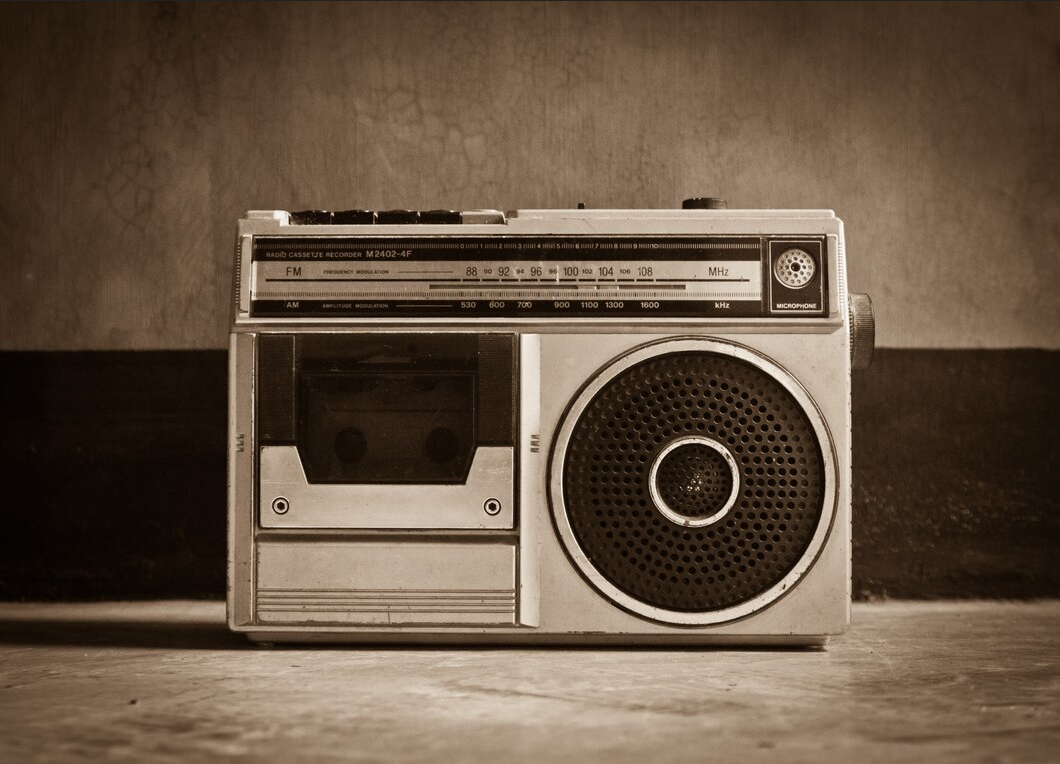
Amplitude Modulation
Amplitude Modulation (AM) is a modulation technique widely used in analog audio and video broadcasting. It involves varying the amplitude of a carrier signal in proportion to the instantaneous amplitude of a modulating signal, which typically carries the information to be transmitted. AM has been a fundamental modulation method, particularly in the early days of radio communication.
In Amplitude Modulation, the amplitude of the carrier wave is altered according to the instantaneous amplitude of the modulating signal. This modulation process results in the creation of sidebands around the carrier frequency, containing the modulating signal information. The carrier frequency remains constant, and variations in amplitude represent changes in the original signal.
Simple Implementation: AM modulation is relatively straightforward to implement, making it suitable for analog communication systems with basic equipment. Ease of Reception: AM signals can be received with simple radio receivers, contributing to the widespread adoption of AM in early broadcast systems. Long-Distance Propagation: AM signals are capable of long-distance propagation, especially during nighttime when atmospheric conditions enhance signal coverage. Amplitude Modulation Index Control: The modulation index in AM can be adjusted to control the strength of the modulating signal and, consequently, the transmitted power.
Susceptibility to Interference: AM signals are prone to interference, such as static and atmospheric noise, which can degrade the signal quality. Inefficient Use of Bandwidth: AM requires a larger bandwidth compared to other modulation techniques, limiting the number of channels that can operate within a given frequency range. Limited Signal Quality: AM signals may suffer from distortion and a limited signal-to-noise ratio, affecting the overall quality of transmitted information.
Broadcast Radio: AM was historically used for long-distance radio broadcasting, providing coverage of news, music, and other information. Aviation Communications: AM is still used in some aviation communication systems for air-to-ground and air-to-air communications. Amplitude Modulation in Two-Way Radios: Certain two-way radio systems, especially those operating in the medium and high-frequency bands, use AM for communication. Evolution and Decline: While AM modulation played a crucial role in the early days of radio broadcasting, its limitations have led to the adoption of more advanced modulation techniques, such as Frequency Modulation (FM) and Digital Modulation, for improved signal quality and efficiency. Despite its decline in certain applications, AM remains in use, particularly in specific niche areas and for nostalgic reasons in the context of broadcast radio.